
Dry Eye Treatment
Dry eyes shouldn’t control your day
Burning. Grittiness. Redness. Watery eyes. Fluctuating vision. Contact lenses that become uncomfortable after only a few hours.
If you have tried artificial tears but the relief never lasts, the problem may not be a simple lack of tears. Dry eye is a complex medical condition with several possible causes, and successful treatment begins by determining which ones are affecting you.
At Oro Valley Eyecare, we provide comprehensive dry-eye evaluation and treatment, including meibomian gland imaging, prescription medications, OptiLight IPL, Tixel-i, professional NuLids eyelid treatment, and individualized home care.
We create a treatment plan based on your eyes, not a one-size-fits-all protocol.
Schedule a Dry Eye Evaluation Call or text: (520) 229-2010
Could dry eye be causing your symptoms?
Dry eye does not always feel “dry.” Symptoms can include:
Burning, stinging, or aching
A gritty, sandy, or foreign-body sensation
Red or irritated eyes
Excessive watering
Blurry or fluctuating vision
Vision that briefly clears after blinking
Sensitivity to light
Tired, heavy, or uncomfortable eyelids
Crusting around the eyelashes
Difficulty wearing contact lenses
Discomfort while reading, driving, or using screens
Symptoms that worsen with wind, air conditioning, or Arizona’s dry climate
These symptoms can overlap with allergies, blepharitis, eyelid inflammation, contact-lens problems, and other eye conditions. That is why an accurate diagnosis matters.
Why eye drops may not be enough
Your tears are more than water. A healthy tear film contains several components that work together to keep your eyes protected, comfortable, and visually clear.
Along the edges of your eyelids are tiny oil-producing structures called meibomian glands. They produce the protective oil layer that prevents your tears from evaporating too quickly.
When these glands become blocked, inflamed, or damaged (a condition called meibomian gland dysfunction, or MGD) your tears may evaporate much faster than normal. This can create a cycle of:
Unstable tears
Rapid evaporation
Irritation and inflammation
Further deterioration of the oil glands
Lubricating drops can provide important relief, but they may not correct blocked glands, inflammation, eyelid disease, inadequate tear production, or other underlying problems.
Because dry eye is rarely caused by one factor alone, many patients benefit from a combination of treatments.
A closer look at the cause
Meibography: See the glands beneath your eyelids
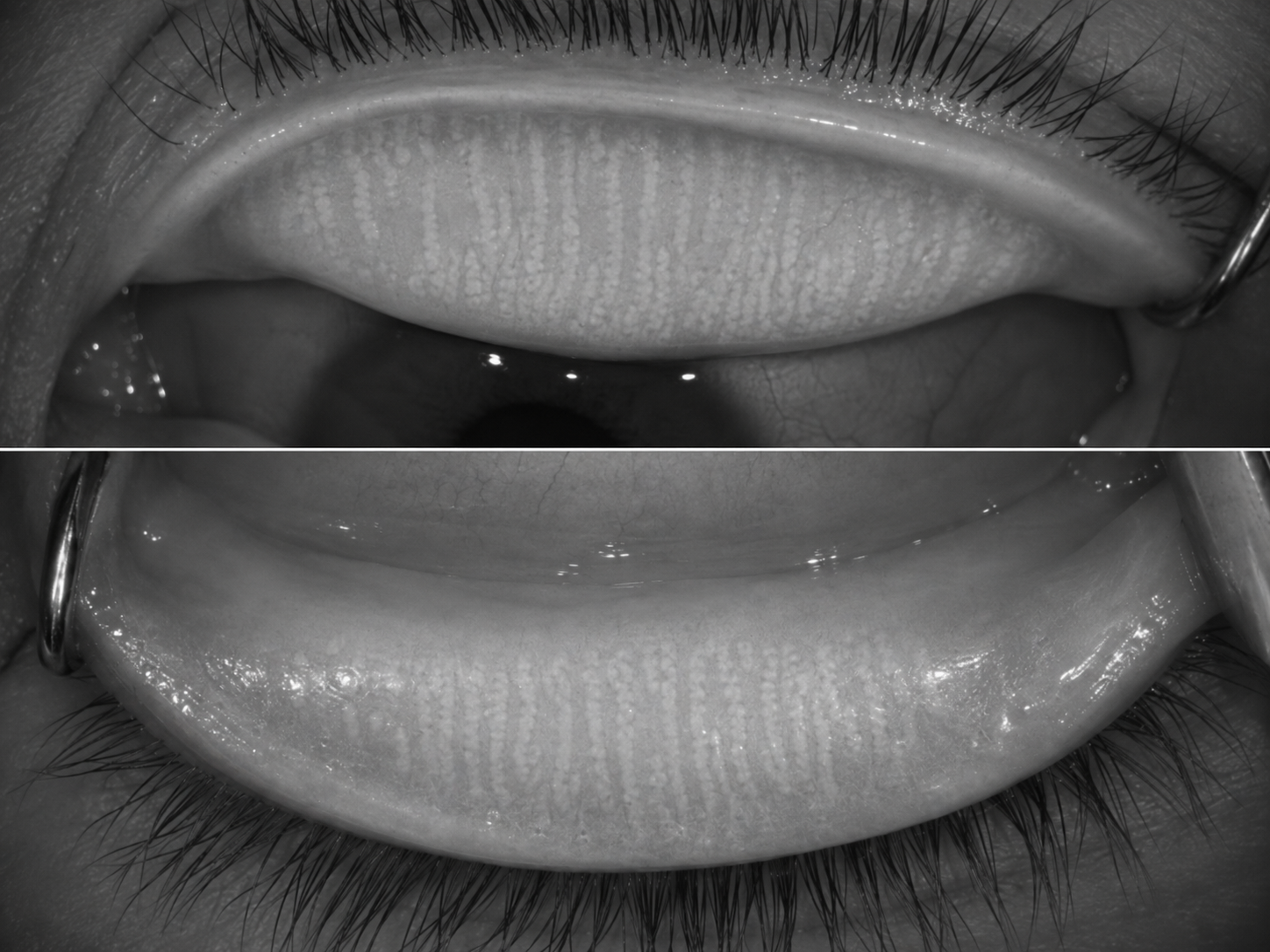
Meibography allows us to photograph the meibomian glands hidden inside your eyelids. These images may reveal:
Shortened or distorted glands
Areas of gland loss
Differences between the two eyes
The overall severity of meibomian gland dysfunction
Seeing your glands helps us determine how aggressively they should be treated and which therapies are most likely to help. It also provides a baseline for monitoring your condition over time.
Your dry-eye evaluation may also include an assessment of:
Tear-film stability
Meibomian gland oil quality and flow
Tear production
Corneal and conjunctival staining
Eyelid position and blink quality
Blepharitis and eyelash debris
Demodex mites
Ocular rosacea
Medications and medical conditions
Screen use, contact lenses, and environmental exposure
The goal is not merely to confirm that your eyes are dry. It is to understand why.
Advanced dry-eye treatment options
Your treatment is customized to your findings. It may combine in-office procedures, prescription medication, lubricants, eyelid care, and changes to your daily routine.
OptiLight IPL
Treating inflammation associated with meibomian gland dysfunction
OptiLight is the first IPL device FDA approved specifically for improving signs of dry eye disease associated with meibomian gland dysfunction in appropriately selected adults.
OptiLight delivers carefully controlled pulses of light to the skin below the eyes and across the cheeks and nose. Treatment may help:
Reduce inflammation associated with MGD
Address abnormal blood vessels that can perpetuate inflammation
Improve the quality and flow of meibomian gland oils
Support a more stable tear film
Interrupt the cycle of inflammation and rapid tear evaporation
A typical initial series consists of four treatments spaced several weeks apart. Treatment is relatively quick, and most patients can return to their normal activities afterward.
OptiLight is not appropriate for every patient or every skin type. Before recommending it, we evaluate your skin, medications, medical history, ocular findings, and treatment goals.
How does IPL help dry eye?
In this video, Dr. Mackelprang explains what IPL is, how it helps meibomian gland dysfunction, and what patients can expect from treatment.
Tixel i
Gentle thermal treatment for the upper and lower eyelids
Tixel-i is an FDA-cleared treatment that applies controlled thermomechanical energy to the skin around the eyes. Tixel i is not a laser and, unlike IPL, does not use light-based energy.
Tixel-i can treat both the upper and lower eyelids, allowing us to address areas that may contribute to inflammation and meibomian gland dysfunction.
Potential advantages include:
Treatment of both upper and lower eyelids
A very short treatment time
Minimal interruption to normal activities
Availability for a broad range of skin types
An additional option for some patients who are not ideal IPL candidates
The ability to use it by itself or combine it with other dry-eye therapies
Our usual initial protocol consists of three treatments approximately two weeks apart, followed by reassessment. Individual results and maintenance needs vary.
Ask Whether Tixel-i Is Right for You
Professional NuLids eyelid treatment
A deeper clean for healthier eyelids
Bacteria, biofilm, oils, and debris can accumulate along the eyelid margins and eyelashes. This buildup can contribute to blepharitis, inflammation, crusting, and poor meibomian gland function—and it can be difficult to remove completely with ordinary home care.
Our professional, higher-powered NuLids system is used in the office to thoroughly clean and exfoliate the eyelid margins and lash line.
Treatment can help:
Remove accumulated debris and biofilm
Reduce crusting around the eyelashes
Improve eyelid hygiene
Support healthier meibomian gland function
Improve blepharitis and associated irritation
Professional NuLids treatment may be recommended as part of your initial dry-eye plan or periodically for maintenance. Depending on your condition, we may combine it with prescription treatment, warm compresses, lubricating drops, OptiLight IPL, or Tixel-i.
Prescription dry-eye treatment
Dry eye frequently involves inflammation, inadequate tear production, excessive tear evaporation, or an abnormal tear film. Depending on your diagnosis, prescription treatment may be used to:
Reduce ocular-surface inflammation
Improve natural tear production
Reduce tear evaporation
Stabilize the tear film
Support corneal healing
Treat associated eyelid disease
Control short-term inflammatory flares
We offer the full range of current prescription dry-eye therapies and select treatment according to your examination findings, previous response, medical history, insurance coverage, and tolerance.
Some medications work gradually and require consistent use for several weeks or months. We will explain what each medication is intended to accomplish, how to use it, and when you should expect improvement.
Carefully selected home treatment
Home care is an important part of controlling dry eye, but not every over-the-counter product is equally effective. Using the wrong drop or compress can add expense without addressing the cause.
We carry professional-quality OPTASE products, including:
Preservative-free lubricating drops
Lipid-supporting dry-eye drops
Heated eye masks and warm compresses
Nighttime lubrication
Eyelid-cleansing products
Warm compresses can help soften thickened oils inside the meibomian glands, while preservative-free lubricants protect the ocular surface without repeated exposure to potentially irritating preservatives.
Instead of simply telling you to “use artificial tears,” we will recommend products and a routine suited to your specific condition.
A personalized treatment plan
Depending on the cause and severity of your condition, your plan may include:
OptiLight IPL
Tixel-i
Professional NuLids eyelid treatment
Prescription anti-inflammatory therapy
Tear-stimulating or anti-evaporative medications
Preservative-free artificial tears
OPTASE heated masks and warm compresses
Nighttime gels or ointments
Eyelid cleansers or hypochlorous spray
Treatment for blepharitis, Demodex, or ocular rosacea
Meibomian gland expression
Punctal plugs when appropriate
Specialty contact lenses or biologic tear products, Autologous Serum or PRP
Nutritional and environmental adjustments
Not every patient needs every treatment. The best plan is the one that addresses the factors affecting your eyes.
What to expect
1. Comprehensive evaluation
We listen to how your symptoms affect your work, reading, screen use, driving, contact lenses, sleep, and daily life. We then evaluate your tear film, ocular surface, eyelids, and meibomian glands.
2. A clear explanation
We review your findings with you, including your meibography images when performed, and explain the likely reasons for your symptoms.
3. A personalized plan
Your plan may begin with home treatment, prescription medication, an advanced procedure such as OptiLight or Tixel-i, or a combination of treatments.
4. Follow-up and adjustment
Dry eye is often a chronic condition. Follow-up allows us to measure your progress, adjust treatment, and create a sustainable maintenance plan.
Frequently asked questions
Can dry eye cause watery eyes?
Yes. An unstable or irritated ocular surface can trigger reflex tearing. Your eyes may water excessively while still lacking the oil layer needed to prevent those tears from evaporating.
Why does my vision change when I blink?
Your tear film is the first optical surface that light passes through. When it becomes unstable, your vision can fluctuate. Blinking temporarily redistributes the tears, which may briefly make your vision clearer.
Is dry eye curable?
Dry eye is usually controlled rather than permanently cured. Many patients experience substantial improvement once the underlying contributors are identified and consistently treated.
How quickly will I feel better?
That depends on the cause and severity of your condition. Lubricants may provide immediate temporary relief, while prescription medications and procedures intended to improve gland function can take longer.
Does insurance cover dry-eye treatment?
Medical evaluation and prescription treatment may be covered depending on your insurance plan and medical necessity. Advanced procedures and certain products may be considered non-covered services. Our team can explain anticipated fees before treatment.
Is IPL the same as a laser?
No. OptiLight uses controlled pulses of broad-spectrum light; it is not a laser. Appropriate eye protection is used throughout treatment.
Treatment options
Choose the care plan that fits you
We will recommend the treatment combination and schedule that best matches your symptoms, exam findings, and goals.
MOST POPULAR
OptiLight IPL
Four treatments, generally spaced 2–4 weeks apart. Includes our Dry Eye Wellness Essentials.
$1,400 for a series of four
$400 per individual session
After the fourth session, subsequent treatments are $300 for the next 6 months. Annual maintenance treatment: $400 per session.
Tixel-i
Three treatments, spaced two weeks apart, designed for maximum symptom relief.
$1,000 for a series of three
Annual maintenance treatment: $300 per session.
NuLids Eyelid Cleaning Treatment
A professional eyelid-cleaning treatment that includes a bottle of Pure & Clean Lid Prep Spray.
$99 per session
$59 when combined with IPL or Tixel-i
OptiLight IPL + Tixel-i
A coordinated treatment plan combining both technologies.
$2,000 for a series of four
Treatments are spaced two weeks apart.
Stop chasing temporary relief
If you rely on drops throughout the day but your burning, watering, redness, or fluctuating vision keeps returning, it may be time to look more closely at the cause.
At Oro Valley Eyecare, we combine advanced diagnostics with modern treatments, including OptiLight IPL, Tixel i, professional NuLids eyelid treatment, meibography, prescription therapy, and individualized home care.
Our goal is not simply to give you another bottle of drops. It is to help you understand your condition, protect the health of your ocular surface, and make your eyes more comfortable again.
Helpful Articles

All Eye Care Services
Find personalized eye care excellence with our comprehensive services. From eye exams to advanced diagnostics, trust us for all your vision needs.

Keep In Touch
For non-urgent questions or to learn more about our services, contact us today!
© 2026 Oro Valley Eyecare. All rights Reserved - Accessibility Statement - Privacy Policy - Sitemap
Managed and Designed by 